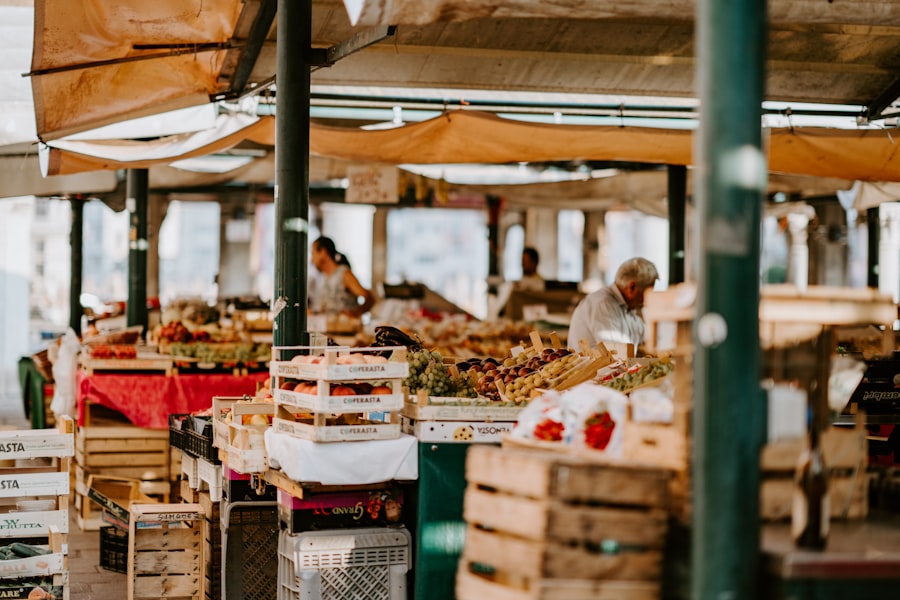
The decline of the traditional UK market was a story told for two decades. Rising competition from supermarkets, changing shopping habits, and the drift of footfall toward retail parks and shopping centres all reduced the viability of the open-air and covered markets that had been the commercial centres of British towns for hundreds of years. Some closed. Many contracted. The ones that survived did so by adapting — moving from purely food and household goods to a mix of artisan produce, independent makers, street food and cultural programming that offered something supermarkets structurally cannot.
The result is that the UK now has a market scene more diverse and more interesting than at any point in living memory, if not more ubiquitous. The best markets are genuinely worth planning a trip around. They function as concentrated expressions of regional food culture, craft tradition and local character in a way that is increasingly rare in an era of national retail homogeneity.
| Region | Notable market | Type | Best day/time | What to look for | Parking/transport |
|---|---|---|---|---|---|
| London | Borough Market | Food and produce; covered and open-air | Wednesday–Friday mornings (less crowded than weekends) | Neal's Yard Dairy, Monmouth Coffee, seasonal British produce, free tastings from many stalls | London Bridge tube/train; no useful parking — public transport only |
| South East | Margate Harbour Arm | Independent food and makers; seasonal outdoor | Summer weekends; market element strongest May–September | Independent food traders, local artists, sea views; combine with Dreamland and Turner Contemporary | Margate station (direct from St Pancras, 1hr 20); limited parking near harbour |
| South West | Bath Farmers Market | Certified farmers market; Saturday only | Saturday 9am–1:30pm; arrive early for bread and meat | Local cheese (Bath Soft Cheese), seasonal veg, free-range meat and eggs, sourdough; all producers are within 40 miles | Bath Spa station 10 min walk; Green Park station (market is in the car park); Saturday parking complex |
| Midlands | Birmingham Rag Market | Indoor covered market; fabric, fashion, food and general | Tuesday, Friday and Saturday; Tuesday is quietest | Fabric market is the best in the Midlands; street food hall; independent clothing and accessories | Birmingham New Street 10 min walk; Bull Ring multi-storey adjacent |
| North West | Manchester Northern Quarter | Street market and independent food; weekend events | Weekend afternoons; check MCR Markets for event schedule | Independent food traders, vintage clothing, artisan products; Afflecks Palace adjacent for indoor independent shopping | Piccadilly or Victoria stations 10 min walk; parking expensive on weekends |
| Yorkshire | Leeds Kirkgate Market | Covered Victorian indoor market; one of the largest in Europe | Monday–Saturday; Wednesday and Friday busiest; Monday quietest | Award-winning fish market, independent butchers, spice stalls, fabric section; the covered hall is architecturally remarkable | Leeds station 10 min walk; Leeds bus station adjacent; market has nearby car parks |
| North East | Newcastle Grainger Market | Covered Victorian arcade market | Monday–Saturday; Thursday and Friday are strongest trading days | Grainger Market Bakery (excellent bread), independent butchers, cheese stalls, the famous Marks and Spencer Original Penny Bazaar stall | Central Station 5 min walk; Monument metro station adjacent |
| Scotland | Edinburgh Farmers Market | Certified farmers market; Saturday only | Saturday 9am–2pm, Castle Terrace; arrive by 10am for full selection | Scottish seafood, Highland beef, local cheese, artisan bread and preserves; all producers from Scotland | Edinburgh Waverley 15 min walk; parking difficult — use public transport |
| Wales | Cardiff Central Market | Victorian covered indoor market; daily | Monday–Saturday; Thursday and Friday for fresh produce | Welsh cakes (several competing stalls), local cheese, cockles and laverbread, independent butchers | Cardiff Central station 5 min walk; city centre car parks within 10 min |
What Makes a Market Worth Travelling To?
The most useful test is whether the market contains things you could not find in a supermarket or online — not simply things presented in a more atmospheric setting. A farmers market where every stall sells produce that is also available in every major supermarket may be pleasant but is not worth a special trip. One where local producers sell varieties and products not available in mainstream retail — heritage tomato strains, raw milk cheese, breed-specific butchery, seasonal game — offers genuine discovery value that justifies the travel.
The covered Victorian market halls of the North — Leeds Kirkgate, Newcastle Grainger, Sheffield Moor Market — are worth visiting partly for their architectural quality and partly for the economic culture they preserve: independent traders who have run the same units for decades, pricing structures that reflect local rather than national retail economics, and a density of independent provision that is increasingly rare in town centres hollowed out by chain retail consolidation. These markets are documents of urban commercial history as much as they are shopping destinations.
- Best time of day: For farmers markets, arrive early (within the first hour) for the best selection of bread, meat and specialist produce — these sell out first. For general covered markets, mid-morning on a weekday offers the least congestion and the most attentive service from traders.
- What to bring: A good-sized bag or backpack (most markets no longer supply carrier bags), a small amount of cash (some stalls are cash-only, especially older covered market traders), and a list of what you specifically want to find — improvising in a busy market leads to overspending.
- Cash vs card: Most outdoor and farmers markets now accept card payment, but always carry some cash for small independent stalls and any covered market traders over 60 who may not have adopted contactless yet.
- Eating at the market: Resist the urge to eat at the first food stall you see — walk the whole market first, identify the strongest options, then choose. The best street food at a market is rarely at the entrance.
Seasonal Markets and How to Find Them
Beyond the regular weekly markets, the UK has a strong tradition of seasonal market events that operate for a few days or weeks rather than year-round. Christmas markets in Bath, Winchester, Edinburgh and Manchester are established and well-attended, though Winchester and Bath are widely considered the strongest in terms of independent trader quality (Winchester in particular has maintained a high proportion of genuinely independent makers rather than chain stalls).
Seasonal agricultural shows — the Royal Highland Show, the Royal Welsh Show, the Balmoral Show — contain market elements alongside the livestock and machinery exhibitions, with regional food and produce often of exceptional quality. Craft fairs associated with arts venues, open studios events in ceramics and textile districts, and popup markets run by local authorities trying to revitalise high streets are all worth tracking in your local area.
Region-by-Region Detailed Guide: South East: Beyond Margate, the South East has a strong network of certified farmers markets through the Farmers' Markets Association, with particularly strong entries in Tunbridge Wells (Saturday, Calverley Ground), Lewes (Friday, School Hill) and Whitstable (Sunday, Harbour Street, seasonal). The Whitstable market combines with the town's independent food culture — oyster bars, independent bakeries, fishmongers — to create a full-day food destination accessible from London in under an hour by train. South West: The Bath Farmers Market anchors a Saturday morning that combines well with the rest of the city — the Roman Baths, the Assembly Rooms and the independent shops of Milsom Street are all walkable from Green Park station...
Continue Reading
Subscribe to Motownart for full access.